Product Development
Gummy Development Guide: Formula, Texture, Shape and Packaging
Development Guide · 10 min read · Published 2026-08-27 · Updated 2026-10-01
Plan a gummy product around its ingredients, serving size, gel base, flavor, texture, shape and packaging. Use sample feedback to refine the specifications before production.
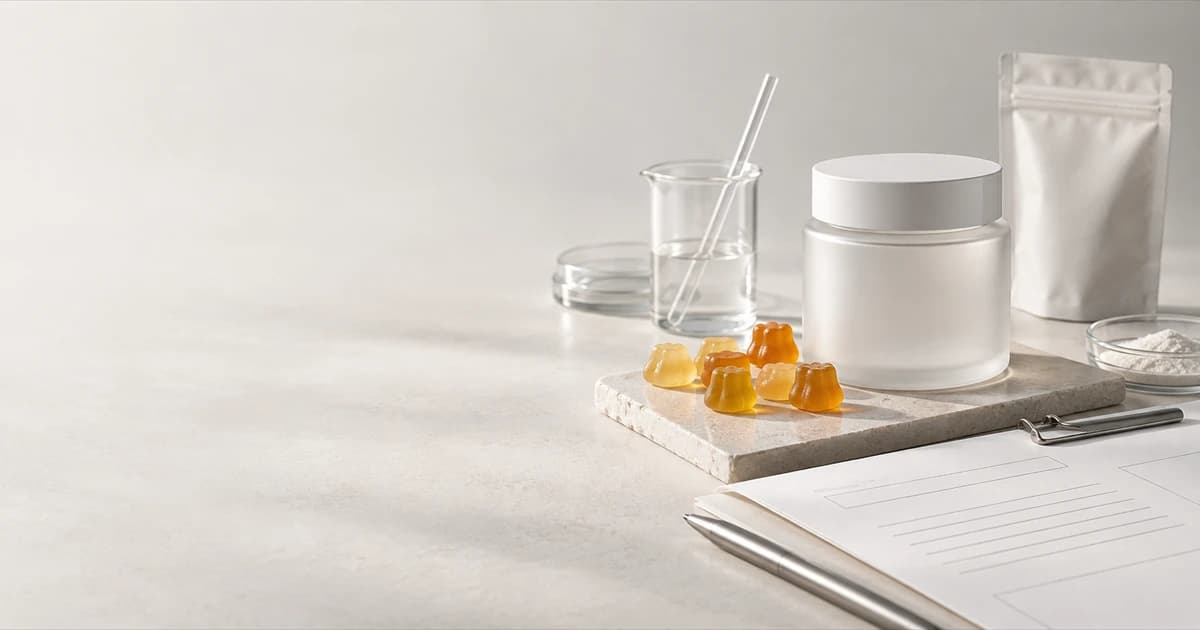
For brand and procurement teams, this guide covers the gummy details to specify, the choices to explore and the criteria to use when reviewing a sample.
Gummy Formula, Shape and Packaging
The most useful gummy brief begins with the product the buyer is trying to make, then adds the experience and commercial context around it. The starting point is not whether a gummy looks premium or whether a bear, dome, ring, or custom silhouette is memorable. It is whether the intended serving, ingredient direction, user routine, and packaging direction can be assessed as one route.
For a first review, write down what is confirmed and what is still a preference. A formula may be a working direction rather than a final specification. A packaging format may be a preference rather than approved artwork. That is acceptable when the brief says so. The goal is to give a technical reviewer enough context to identify dependencies rather than manufacture confidence from incomplete inputs.
If the format itself is still undecided, begin with how to choose a supplement format. That article explains the broader format-selection decision. This page assumes that gummies are a serious candidate and focuses on how the development decisions connect.
A practical first-brief checklist
| Brief field | What to state | Why it matters to the review |
|---|---|---|
| Intended user routine | When and how the gummy is expected to be used | Helps frame serving, sensory expectations, and pack use |
| Formula direction | Proposed ingredients or a clear development question | Lets the reviewer identify compatibility and information gaps |
| Serving concept | Pieces per serving, if known, or an open question | Connects the formula direction to piece size and pack count |
| Texture and sensory direction | Desired chew, flavor family, sweetness, color constraints, and deal-breakers | Makes subjective preferences reviewable |
| Piece and shape direction | Standard or custom shape, approximate visual intent, and any constraints | Prevents shape from being considered in isolation |
| Packaging direction | Bottle, pouch, jar, sachet, or undecided | Brings protection, count, labeling, and logistics questions into scope |
| Market and project status | Intended destination if known, plus what is approved or open | Keeps regulatory and commercial assumptions visible |
1. Define Ingredients and Amount per Serving
The formula direction and serving concept should be reviewed as a pair. An ingredient list by itself does not describe how much material must fit into each piece, how many pieces make a serving, which sensory attributes are acceptable, or which constraints matter for the intended use. Conversely, a desired piece count cannot be evaluated without the formula direction.
The technical literature describes gummies as hydrogel-based systems in which the selected hydrocolloid and sweetener composition can influence gel formation, water mobility, texture, and storage behavior. A 2026 review indexed by PubMed also notes that interactions between incorporated compounds and the gel matrix can affect texture, sensory acceptance, stability, and bioaccessibility. Review ingredient compatibility for the actual formula.
Bring the following to the first discussion:
- the intended ingredient or formula direction, including known exclusions;
- the intended serving experience, including whether one or several pieces are acceptable;
- any non-negotiable sensory constraints, such as a flavor family to avoid; and
- the facts that are still unknown, including target market, final label, and commercial volume.
This is where a team can decide whether it needs a specification-led OEM discussion or a development-led ODM discussion. The OEM / ODM project path explains that distinction without turning an early brief into a promise of feasibility.
2. Describe the Texture You Want
Texture is not one attribute. A buyer who asks for a "premium" gummy may be referring to bite, firmness, elasticity, surface feel, chew duration, stickiness, or how the piece changes over time. Those are different observations. Translate the desired experience into language a sample review can use.
For example, state whether the team prefers a short, soft bite or a more elastic chew. Say whether a dry surface feel is important. Identify whether a coating, oil finish, or sugar-free appearance is a preference, a constraint, or not yet decided. Avoid assuming that a reference confection or a competitor's product establishes a transferable specification.
The FDA-authored perspective on gummy dietary supplement manufacturing and testing describes formulation, manufacturing, and analytical-testing challenges as relevant to product quality, consistency, stability, and consumer confidence. The article record is a useful reason to ask how the proposed sensory target will be evaluated. It does not prescribe a universal texture target or endorse a particular production route.
3. Discuss Pectin, Gelatin and Other Gel Bases
Pectin and gelatin are often used as shorthand for different gummy directions. They are not interchangeable branding labels. A buyer does not need to dictate a gel system before the first conversation: state whether a base is required, preferred, excluded, or open, then ask what information is needed for review. Do not claim that one system is inherently better, more stable, or suitable for every ingredient without product-specific evidence.
4. Specify Gummy Shape and Piece Size
Shape affects more than the shelf image. Piece dimensions, mold geometry, visual detail, and count work with the serving concept and pack. A custom shape may be worthwhile, but it introduces another item to define and review.
Start with three choices:
- Standard shape: the priority is to assess the formula and sensory direction with a relatively simple visual starting point.
- Adapted shape: the team has a recognizable direction but can accept changes that preserve the use experience.
- Custom shape: the silhouette is part of the brief and needs its own feasibility, sample, packaging, and commercial review.
Ask how the shape, dimensions and formula affect mold options, minimum order and sample preparation.
5. Define Flavor, Sweetness and Color
Flavor, sweetness, color, and texture create one tasting experience. A team may prefer a flavor family, a color direction, or a sweetness profile, but these preferences should be recorded with the formula direction and texture target. A color concept that looks convincing in a mood board does not establish its suitability for a specific market, label, ingredient system, or finished product.
Use a short sensory brief instead of vague adjectives. Include the flavor family, notes to avoid, desired sweetness perception, color boundaries, and any reference products used only to communicate an experience. A reference is not a specification or proof that a result can be reproduced.
When a formula or sensory reference still needs comparison with another dosage form, gummies versus hard capsules provides the format-level comparison. It should not be used to infer that a gummy is the right route for every formula.
6. Use sampling to answer agreed questions
Sampling is most useful when the team knows what it is trying to learn. Before requesting a sample, write a small evaluation plan: which attributes are being reviewed, who will review them, what counts as a directional pass or a question for iteration, and which variables remain open.
An early sample can support a conversation about sensory direction, piece presentation, or formula questions. It does not, on its own, establish final stability, packaging performance, market compliance, production capacity, finished-product testing, commercial availability, or delivery timing. Each of those subjects requires its own evidence and responsible review.
The supplement sampling process guide explains the fuller sampling workflow. Use it to structure feedback, changes, and the decision to continue the development discussion.
7. Choose Packaging Before Final Artwork
Packaging is part of the gummy route, not a decorative afterthought. The pack direction affects how pieces are counted, handled, protected, labeled, and presented. It can also introduce commercial and supply dependencies that cannot be resolved by a visual render alone.
For U.S. dietary supplements when that framework applies, FDA's Small Entity Compliance Guide says that the master manufacturing record includes a packaging description and representative label or a cross-reference to it. The guide also discusses packaging and label controls. The applicable legal requirements depend on the product and destination; this reference does not certify a supplier or determine the rules for another market.
At brief stage, state the preferred pack type, approximate count if known, label status, and whether the product needs to be assessed for a particular destination. Keep unknowns visible. The companion guide on how packaging affects MOQ and lead time explains why formula and pack assumptions must travel together without assigning universal numbers.
Gummy Development Checklist
| Decision | Input to prepare | Question for the technical or commercial review | Do not assume |
|---|---|---|---|
| Formula and serving | Ingredient direction, exclusions, serving preference | What information is needed to assess the route? | That an ingredient list determines piece count or feasibility |
| Texture and sensory | Desired bite, finish, flavor boundaries, references | How will the target be described and reviewed? | That a descriptive word is a complete specification |
| Gel system | Required, preferred, disallowed, or open | What trade-offs or questions need review? | That one base is automatically best |
| Shape and size | Standard, adapted, or custom direction | Which visual choices alter the development question? | That shape has no technical or commercial effect |
| Sample review | Evaluation criteria and decision owner | What does this sample answer, and what remains open? | That a sample proves the final product |
| Packaging | Pack preference, label status, market context | Which dependencies must be assessed together? | That packaging can be finalized independently |
What to send in a first gummy project inquiry
A productive inquiry separates known choices from requests for guidance. Include the gummy's intended use, formula direction, sensory direction, shape preference, packaging direction, market context if known, and a short list of open questions. Do not invent an MOQ, lead time, certificate, test result, capacity figure, or regulatory conclusion to make the request feel more complete.
The supplement manufacturing RFQ guide gives a broader checklist for turning those inputs into a comparable request. It is the right place to prepare commercial assumptions; this page remains focused on gummy development decisions.
Frequently asked questions
Should we choose the shape before the formula is final?
Yes. You can choose a preferred shape early. We check the mold, piece size, formula and packaging together before confirming the shape through samples.
Is pectin or gelatin always the better gummy base?
Neither is always better. Share any required or excluded gel bases and the texture you want. Review the choice with your formula, serving size and target-market requirements.
Can a sample confirm the final packaging and shelf life?
No. A sample can answer the defined questions in a sample review, but it does not by itself establish final packaging performance, shelf life, testing, market compliance, commercial terms, or production readiness. Keep those items open until they have appropriate evidence.
What gummy details should be in an RFQ?
Include the formula direction, desired serving experience, texture and flavor notes, shape preference, packaging direction, intended market if known, and the decisions that remain open. See the OEM / ODM project preparation guide for the broader first-brief structure.
Prepare Your Gummy Product Brief
Include ingredients and amount per serving, flavor, texture, shape, pack type and target market. Agree what the first sample should demonstrate and how your team will review it.
Send your gummy project brief to VITHELO by email or WhatsApp to discuss formulation, samples and packaging.