Packaging and Launch
How Packaging Affects Supplement MOQ and Lead Time
Commercial Variables Guide · 9 min read · Published 2026-09-04 · Updated 2026-10-01
Bottles, pouches, labels and other packaging components can affect minimum orders and production timing. Learn which quantities, artwork approvals and supply dates to discuss when requesting a quote.
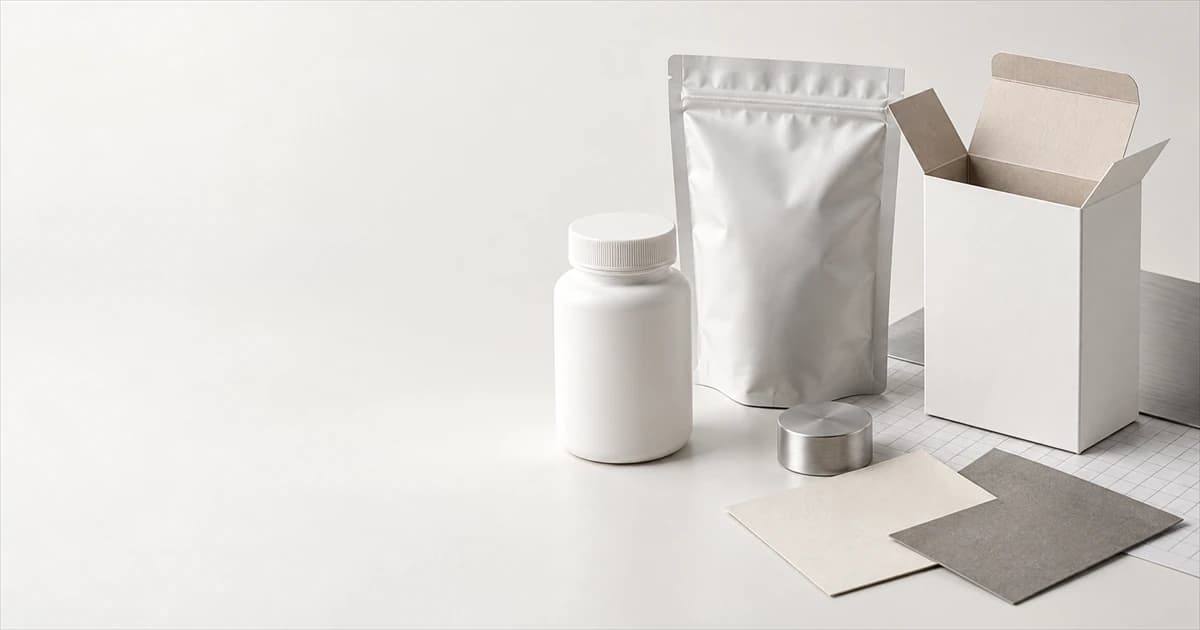
For a first quotation conversation, separate three things: the product run, the packaging components, and the work required to fill, label, assemble, or carton the finished product. A single number can conceal a component purchase minimum, a format-specific operating condition, or an artwork approval that is still open.
Product, Component and Packing Minimums
The most useful starting point is to map the constraints that have different owners and decision dates. A finished product may have a production-run constraint. A bottle, pouch, carton, cap, label, or sachet film may have its own sourcing or printing constraint. The selected line and pack-out sequence may introduce a third operating constraint. The commercial plan must satisfy all of them.
| Constraint to separate | What it describes | Buyer question to ask |
|---|---|---|
| Product-run constraint | The proposed formula, dosage form, batch setup, and finished quantity | What quantity is feasible for the proposed product route? |
| Packaging-component constraint | The quantity, specification, sourcing, or printing conditions for each component | What quantity must be purchased, printed, or reserved for each component? |
| Packing-operation constraint | Filling, labelling, assembly, case packing, changeover, and sequence | Can the proposed product quantity be packed into this configuration under the reviewed route? |
This is a planning model, not an industry formula. It does not tell a buyer what any manufacturer will quote. It does make an ambiguity visible: a product run can be technically feasible while a custom component creates a different commercial threshold, or the component quantities can be available while the pack design still needs an operating review.
For this reason, ask to see the assumptions separately. A useful feasibility response identifies the product quantity, every relevant component quantity, expected use versus potential remainder, and the point at which the route may need revision. It should also state what remains open. That is more decision-useful than a single MOQ presented without context.
Compare Stock and Custom Packaging
Stock packaging and custom packaging are not a simple “easy” versus “hard” choice. They are different dependency maps. A stock bottle or closure may remove a custom-tooling step, but the actual dimensions, material, component condition, current availability, compatibility, label panel, and count still need review. A stock choice is a candidate route, not a promise that a component is available for a particular project.
Custom packaging can add decisions that must be coordinated before the product is packed: a shape or closure specification, tool or sample work where relevant, component approval, a print file, a proof, a material or finish decision, and a supplier purchase condition. A printed carton, pouch, or direct-print container also concentrates commercial decisions in the artwork and procurement path.
The buyer question is therefore not “Is custom packaging slower?” Ask instead: “Which decision must be released before this component can be ordered, and which decision can proceed in parallel with formula or format work?” If an option needs a final count, label dimensions, or approved artwork before it can move, that dependency belongs in the schedule.
Record Pack Size, Materials and Artwork
The pack specification should be specific enough for a reviewer to identify what is proposed, what is optional, and what cannot change. At minimum, record the pack type, nominal count or fill, component dimensions where known, label versus direct print, visible finishes, any multi-component assembly, target market, and the current artwork state. Mark unknown fields as open rather than filling them with a plausible assumption.
This record also reduces rework. A change in count can affect the label copy, the visible net quantity, the pack size, and the assembly assumptions. A change in container can alter available label area or the fit of a closure. These are relationships to examine, not universal outcomes.
Compare dosage formats before choosing a packaging route. For oral films, use the packaging and stability brief to connect the direct-contact pack, sample version and supporting evidence.
Label space and market review are packaging inputs
Packaging is also an information surface. For example, the FDA’s dietary-supplement labelling guide describes five required label statements for containers and packages sold under the U.S. framework: identity, net quantity, nutrition labelling, ingredient list, and the manufacturer, packer, or distributor’s name and place of business (FDA, Chapter I, retrieved 2026-09-30). The same guide explains that the Supplement Facts panel must identify dietary ingredients and quantities and include serving information, subject to defined provisions (FDA, Chapter IV, retrieved 2026-09-30).
The planning implication is narrow but important: label area, count, serving direction, and the target market should be discussed before artwork is treated as final. The FDA sources are U.S.-specific, not a global label template. In the EU, Regulation (EU) No 1169/2011 likewise treats legibility, including font, colour, and contrast, as part of food-information considerations (EUR-Lex, retrieved 2026-09-30). A buyer should obtain appropriate market-specific regulatory review rather than transfer one jurisdiction’s assumptions to another.
This is also why visual approval should have a clear scope. A commercial artwork approval can confirm the selected brand expression, but it does not by itself establish that every label statement is suitable for every market. Keep the market, version, reviewer, and unresolved questions connected to the file release.
The practical insight is that artwork is not merely a design milestone. It is a dependency record connecting the selected component, the available label space, the pack count, and the intended market. Treating it as a controlled release makes late changes visible before purchase or packing decisions become difficult to unwind.
Ingredient Supply, Artwork and Production Timing
There is no reliable universal supplement lead-time figure. A credible schedule begins with the tasks that must be complete and the tasks that can proceed in parallel. Use the following sequence to discuss tasks and dates with your manufacturer.
| Stage | Decision or evidence needed to move forward | Typical risk if left open |
|---|---|---|
| Product and pack brief | Format, pack direction, count, market context, target quantity | Teams quote against incompatible assumptions. |
| Component route | Stock or custom route, material and size direction, supplier questions | A component is considered “chosen” before its actual requirements are reviewed. |
| Artwork and review | Correct version, label space, claims and market questions routed to the right reviewer | Print or purchase decisions are made against an incomplete release. |
| Component confirmation | Agreed component specification and availability or procurement decision | Production is scheduled without the required pack materials. |
| Production and packing plan | Product route, components, packing configuration, and release conditions aligned | A finished product and its packaging arrive out of sequence. |
The critical path is the longest chain of dependencies that cannot be bypassed. It can begin with formula or sampling work, a packaging component, a proof, a market review, or the coordination of multiple components. Some tasks can run at the same time, but they should only be placed in parallel when a change in one will not invalidate the other.
Packaging and labelling also belong in controlled operations, not only marketing. FDA’s small-entity cGMP compliance guide describes specifications for dietary-supplement labels and packaging, as well as checks for packaging and labels before operations and controls intended to maintain traceability (FDA small-entity compliance guide, retrieved 2026-09-30). These requirements make packaging specifications and label checks part of production planning.
What to include in a packaging brief before quotation
The first brief does not need to be complete. It does need to distinguish confirmed information from preferences and unknowns. Include the following fields, then ask which unanswered fields prevent a meaningful feasibility view.
- Product context: dosage form, intended serving direction, estimated finished quantity, and target market.
- Packaging direction: bottle, pouch, jar, sachet, stick pack, carton, or multi-component configuration, plus acceptable alternatives.
- Count and dimensions: count per pack, fill or portion context, and known dimensions or restrictions.
- Component status: stock candidate, custom element, print requirement, sample requirement, and who owns each open decision.
- Artwork status: no artwork, working design, review-ready file, or approved release. Include version and intended market.
- Commercial questions: request product-run, component, and packing assumptions as separate lines. Ask what could be left over, revised, or dependent on supplier confirmation.
- Schedule questions: ask which event releases procurement, which steps may run in parallel, and which condition controls the critical path.
This brief creates a useful handoff between commercial, product, packaging, procurement, and review teams. It does not replace a master specification, quality review, legal advice, or a supplier’s approved quotation.
Frequently asked questions
Does custom packaging always increase supplement MOQ?
No. It depends on the minimum quantities for the container, printing and any tooling, as well as the product run. We check these together and confirm whether your packaging choice changes the minimum order.
Can a stock bottle remove packaging lead time?
It can reduce packaging development time, but availability, label printing and packing still affect the schedule. We check the bottle's fit and protection requirements for your product before confirming timing.
Should artwork be finished before an OEM / ODM discussion?
No. Share your brand artwork, packaging idea or a reference image. We can help develop the design; final artwork, dimensions and target-market label requirements are approved before printing.
What supplement MOQ should a buyer expect from VITHELO?
For gummies, the stated minimums are 500 bottles or 500 pouches. See the OEM / ODM page for other format minimums. Ask VITHELO about additional packaging, including individual wraps. Share the formula, preferred pack and estimated quantity to discuss the applicable minimum order.
Prepare Your Packaging Requirements
Packaging is a commercial and operational decision, not a final decorative layer. Separate the product, component, and packing constraints; show what is confirmed; and ask which dependency controls the route. That gives a manufacturer or packaging partner enough context to discuss feasibility without presenting a placeholder number as a promise.
For an OEM / ODM conversation, bring the preferred pack, acceptable alternatives, target quantity, target market, artwork status, and the decisions that remain open. review the OEM / ODM project path or prepare your supplement manufacturing RFQ.