Product development
Private label creatine gummies: what to check before ordering
Buyer sourcing checklist · 10 min read · Published 2026-10-10 · Updated 2026-10-11
Before ordering creatine gummies, check the content of the proposed serving and the evidence for the finished product. Then compare the full quoted scope, including samples, packaging and testing. A raw-ingredient certificate is useful, but it does not report the content of the gummies you are buying.
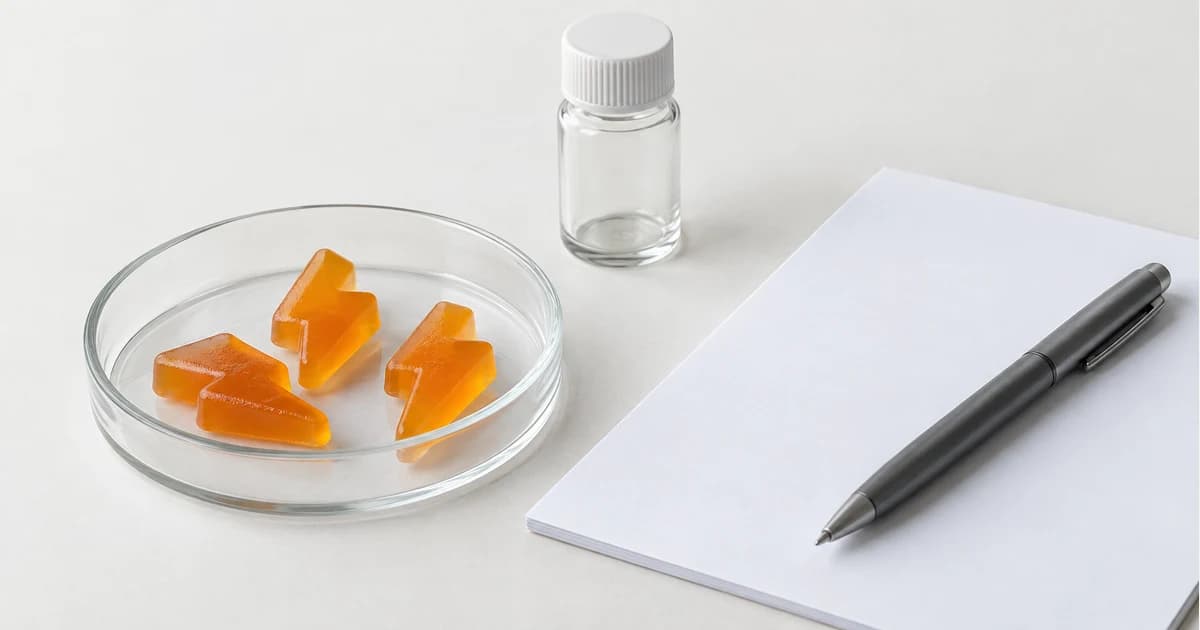
Ask the supplier to connect the sample, formula version, reports and quotation. For a new formula, record what has been tested and what work is still planned. Development can progress in stages: you might accept a flavor while the technical team continues the content or packaging assessment.
Use this guide to judge what each supplier's evidence supports, compare offers and record the approvals needed for your project. The FDA references apply to US dietary supplements; label and product requirements need to be checked for each destination market.
Define the product before comparing suppliers
Give each supplier the same starting brief:
- Market and channel: where the product will be sold and whether it is for online retail, stores or distribution.
- Formula and serving: your preferred creatine form, target amount and proposed gummies per serving, or the questions you need the formulation team to resolve.
- Pack and quantity: packaging preference, gummies per retail pack and estimated order quantity with its unit.
- Timing: required arrival date and destination, rather than a launch date without shipping context.
Say whether you want an existing formula or custom development. You can request an initial quote before everything is final, provided it lists its assumptions. Ask the supplier to revise it when the formula, testing scope or pack changes.
For a new formulation, get feasibility feedback before fixing the label amount or commissioning final artwork. The gummy development guide explains the earlier formula, texture and packaging decisions.
Check which product the report actually covers
A certificate of analysis, usually shortened to COA, identifies a material or sample and reports results for it. A raw creatine COA does not report the creatine content of a later gummy batch. Likewise, a report for another flavor needs an explanation of how it relates to your formula.
For reports on finished gummies, ask the supplier to link the report to the product name, formula version and batch or development sample reference. Check the test date, laboratory, method, measured ingredient, units and acceptance limits. An identifier missing from the report may be available in supporting records; request the connection rather than guessing.
How to act on the report you receive
| What you receive | Decision it supports | What still needs review |
|---|---|---|
| A raw creatine COA | Review of the identified ingredient | Finished-gummy content and the production verification plan. |
| A report for another formula or flavor | Discussion of the supplier's testing approach | Its relevance to your formula, explained by the technical team. |
| A result with unclear units or reporting basis | No comparison with your serving amount yet | Laboratory clarification of the units, measured ingredient and calculation. |
| A report for your development sample | Technical review of that sample against agreed limits | How the production formula and process will be verified. |
| A report linked to the production batch you are buying | Review of the reported results against the agreed specification | Method suitability, required records and the manufacturer's release decision. |
If a report is missing or covers a different formula, ask what work is needed for your product, who will complete it and when. Keep planned work separate from results already received.
Ask the responsible quality team to explain the acceptance limits and whether the method is suitable for the finished gummy. The buyer's job is to make the requirements clear and obtain the review, rather than choose a universal pass threshold from a general article.
Creatine content is one part of the testing scope. Have the quality reviewer identify the other checks needed for the formula and market, including microbiological and contaminant checks as applicable. Agree who reviews the results, releases the batch and supplies the buyer's records.
For US dietary supplements, the FDA CGMP guide addresses component and finished-batch specifications, verification and scientifically valid methods. Request the manufacturer's plan and its basis. The buyer documentation checklist covers the wider records to discuss.
Put the test result and label on the same serving basis
Record three separate fields: creatine form, creatine amount per serving, and gummies per serving. Total gummy weight belongs in another field; it is not the creatine amount.
If the laboratory reports creatine amount per gummy, the serving calculation is:
Reported creatine amount per gummy × gummies per labeled serving = reported creatine amount per serving.
For a result reported as milligrams per gram of gummy, you also need the appropriate gummy weight for the tested sample:
Reported mg per gram × grams per gummy × gummies per labeled serving = reported mg per serving.
Have the laboratory confirm the conversion, weight and reporting basis. A result in another unit needs conversion first. The report and specification must also use the same definition of the measured ingredient; do not assume that the weight of an ingredient added to a recipe equals the laboratory's reported creatine result.
Use the calculations to align the report with the serving you are comparing. Have the quality team confirm method suitability and the production sampling plan; the arithmetic does not establish a consumer dose or uniformity between pieces.
For a US launch, the FDA's Supplement Facts guidance covers serving size and dietary-ingredient quantity declarations. Review the final formula, directions and label together.
Ask what supports the proposed shelf life
A shelf-life statement on a quote needs an evidence trail. Request the formula version, pack material and closure, storage conditions, completed sampling time points and results behind it.
Include creatine-content results alongside appearance and texture checks. A storage photo cannot answer the ingredient-content question. If the work is ongoing, ask which period is already covered, what remains to be tested and how the technical team supports the proposed duration. Where accelerated testing is used, ask how it is being interpreted alongside available real-time results.
A different pouch material or closure needs review. Ask whether the study covers the pack you are ordering and what further work a change requires. For a resealable pack, also discuss supported storage directions and after-opening guidance. The purchasing decision depends on whether the proposed formula and pack are covered, not simply on whether a report contains the words "stability tested."
The FDA CGMP guide does not require an expiration date under that rule, but says a date placed on the label should have supporting data. Review that evidence before approving the printed date for a US product.
Make sample feedback specific enough to use
Separate sensory feedback from technical acceptance. Record the sample reference and your decision on aroma, sweetness, aftertaste, piece size, chew and surface finish. Review the proposed serving as well as an individual gummy.
A useful revision note might read:
This gives the supplier a clear next step. "Sample approved" leaves too much unstated. Acceptance of flavor or shape does not approve the complete product specification or release a label for printing.
Review the pack for the way it will be sold and used. For online retail, request dimensions for fulfillment and discuss delivery handling. For stores, check the retail label and display information. For distribution, confirm counts per pack and carton. Test opening, resealing and removing the proposed serving; the sampling guide helps organize the feedback.
Compare quotes on the same product and cost basis
Match the creatine specification and serving before comparing prices. A lower price per gummy may describe a different product. Then align the currency, contents of each retail pack, order quantity and included work.
If one quote includes finished-product testing and another leaves that charge unspecified, request a matching scope before comparing totals. Beside the price, note whether the work is planned, completed or has produced an accepted result.
Gummies per retail pack ÷ gummies per labeled serving = calculated servings per retail pack.
Quoted price per retail pack ÷ confirmed servings per retail pack = quoted product price per serving.
Use these calculations only after the supplier confirms the pack price and serving count. If an offer is priced by kilogram or carton, ask for a pack conversion first. If a pack contains a partial serving, or the label uses a rounded serving count, agree the comparison basis instead of silently treating the remainder as a complete serving.
Price per serving helps compare product cost. Testing, development fees, packaging and delivery terms still need to be aligned before comparing the full offers.
Quote-comparison fields
| Field | Ask each supplier to state |
|---|---|
| Product | Formula version, creatine form and amount, gummies per serving. |
| Pack | Gummies per retail pack, material, closure and packs per shipping carton. |
| Testing | Available evidence, production verification scope, required records, delivery dates and included charges. |
| Quantity | Minimum order quantity (MOQ) and quoted order quantity, each with its unit: gummies, packs or cartons. |
| Price basis | Currency, price unit and quantity tier. |
| Other costs | Sample, development, artwork, testing and shipping charges; which recur on repeat orders. |
| Delivery | Delivery terms, destination and who arranges freight. |
| Timing | Sample and artwork approvals, production, dispatch and expected arrival. |
If offers differ, request revisions or record the differences beside the prices. For a launch deadline, work back from arrival and ask which approvals must happen first. The RFQ preparation guide covers the broader quotation process.
Review claims and artwork against the agreed formula
Use the same formula and serving details on the pack, storefront and sales materials. If sugar-free or vegan positioning is part of the brief, request support for the final formula and supply chain before approving the wording. If a certification is requested, check its holder, site, scope and validity; a logo does not verify your product's creatine content.
The NIH Office of Dietary Supplements fact sheet summarizes creatine research. It does not establish the content, stability or performance of your finished gummy. Ingredient research and product-specific evidence answer different questions.
For US wording, consult the FDA's supplement claims guidance during review. For other destinations, check the applicable local requirements. Save the approved formula specification, wording and artwork version together so a later change triggers the right review.
Record approvals by stage
An approval should name the item, its version and the decision being made. Use the following distinction in your purchasing record:
| Stage | What to record |
|---|---|
| Initial quote | The formula, pack, quantity and evidence assumptions behind the price; request a revised quote when they change. |
| Development sample | Accepted flavor, texture or appearance features, requested changes and unresolved technical items, linked to the sample reference. |
| Production authorization | Agreed formula and pack versions, acceptance criteria, price, testing and document plan, and the owner and due date of each required approval. |
| Production batch release | The manufacturer's release decision and the agreed records for the batch, with any unresolved result referred to the responsible quality team. |
If an answer is incomplete, name the affected decision rather than label the whole project "approved" or "rejected." Keep dependent approvals pending while unrelated development work proceeds under its agreed scope.
Send a brief that makes the next step clear
Copy this into a supplier email and replace the brackets with your requirements. Unknown items are useful questions to include.
For a mango flavor, lightning shape and pouch direction, the Mango Creatine Gummies page offers a starting point for discussion. Bring the formulation and testing questions above into that discussion. Send your project brief to VITHELO with the requirements you know and the decisions you need help resolving.