Supplement Formulation Review: Ingredients, Serving and Samples
Formulation Development Guide · 4 min read · Published 2026-10-01 · Updated 2026-11-07
See how ingredient form, amount per serving and capsule or gummy count shape a formula, then use samples to compare taste, texture and packaging.
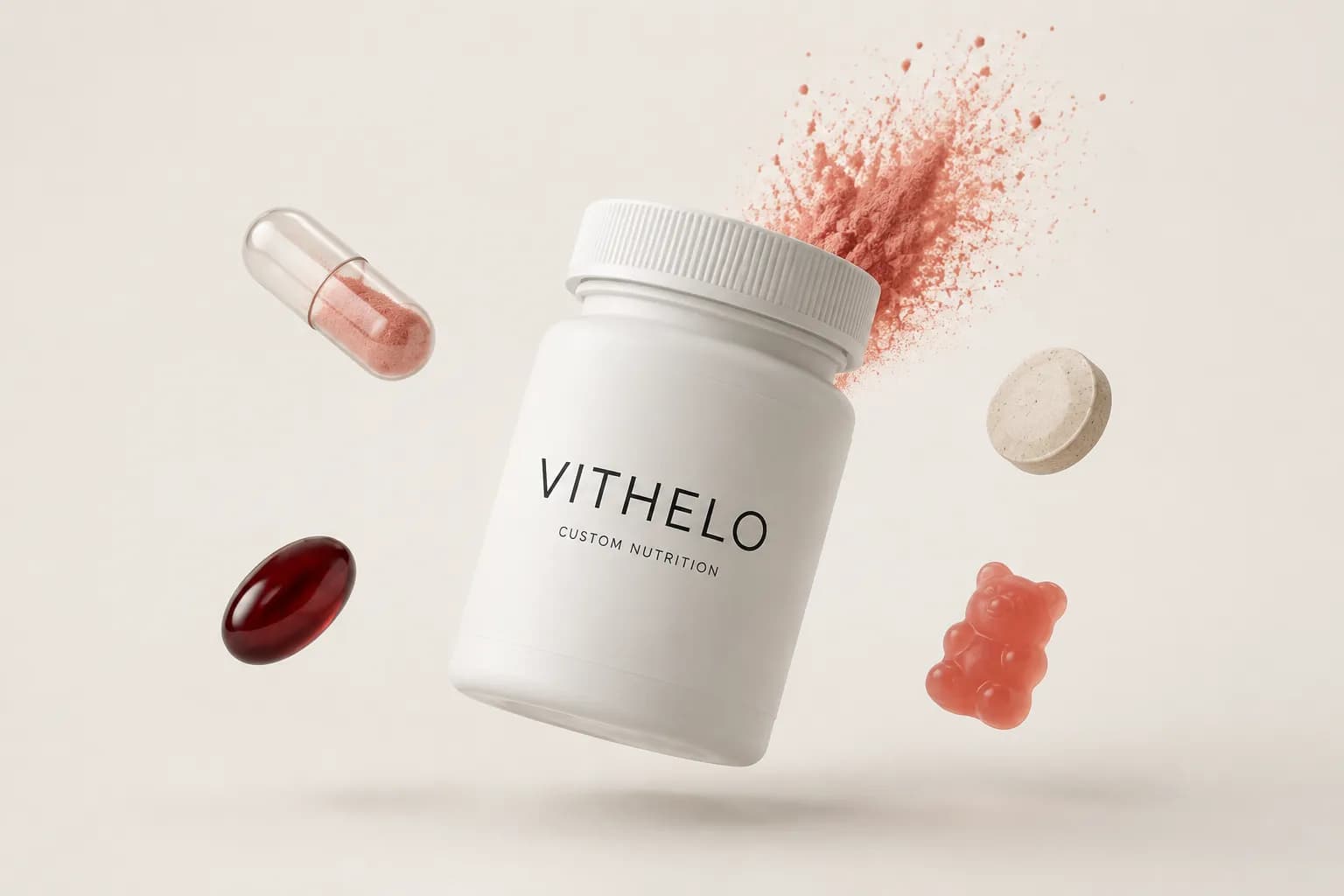
A product idea is a starting point
You can start a formulation review with an ingredient idea or an existing formula. Explain who the product is for, where it will be sold and which format you prefer. Ask the development team to propose the details you have not yet decided.
If you have a formula, attach its current version and available ingredient specifications. If you have only a concept, describe the experience you want: for example, a powder prepared in cold water or a gummy with a short, soft chew. References help explain those preferences; they do not provide a ready recipe.
Separate requirements from preferences
- Fixed: requirements that a proposed product must meet
- Preferred: ingredient, taste, format or packaging choices you can reconsider
- Open: questions that need a development or manufacturing discussion
- Evidence needed: records or sample decisions required before you can approve a specification
Identify the ingredients precisely
Share the material form and available specification beside each ingredient name. A botanical powder and an extract, for example, should be identified separately. State whether the ingredient is required, an option to compare or a material you would like to supply.
Extract weight and marker-compound content are different quantities. For a botanical extract, state both the amount of extract and the specified marker content. Materials with the same botanical name may have different specifications, so their extract weights alone do not establish equivalent composition. A marker helps describe the material; it is not automatically the constituent responsible for a health effect.
For dietary, religious or allergen requirements, write the exact restriction and ask which records are needed. If a detail is unknown, make it a question for the team. Have the responsible market reviewer check ingredient suitability and proposed claim wording for the destination.
Review the format and pack together
Include the proposed amount per serving and the number of units or measured portion the customer would use. Ask whether the ingredients fit that serving in the preferred capsule, gummy, powder or liquid.
For a fixed total ingredient amount, moving from two capsules to one doubles the ingredient amount each capsule must hold. Whether it fits also depends on the volume occupied by the blend and room for other ingredients. A gummy needs space for its gel and sensory ingredients as well, so a capsule recipe cannot simply become a gummy recipe by keeping the ingredient weights unchanged.
Describe preparation and packaging in the customer's setting. A drink mixed at home and a sachet carried to work may need different handling choices. Include the pack count or net contents, flavor and texture targets, and any alternatives you can accept.
Powder mixing: wetting, dispersion and dissolution
A powder first needs to become wetted and distributed through the liquid; soluble components can then enter solution. Floating powder, lumps with dry centers and sediment after standing describe different problems. Fine particles may form an evenly dispersed suspension rather than a completely dissolved, clear drink.
Compare samples as the intended serving: keep powder weight, water volume, water temperature, order of addition and mixing method consistent. The same powder in different water volumes changes concentration and drinking experience. A shaker and a spoon can also produce different dispersion, so the comparison conditions need to stay the same when assessing a formula or ingredient change.
Record both the freshly mixed drink and its condition after standing: how easily the powder wets, whether lumps break apart, visible particles, whether sediment redisperses and any gritty mouthfeel. Choose measures that suit the formula and intended use. Methods developed specifically for milk powders do not establish a universal pass limit for all nutrition powders.
These observations help identify whether powder characteristics, formula concentration, processing or preparation instructions need adjustment. They describe mixing experience; ingredient content and storage stability require their corresponding specifications and tests. Use the [sampling guide](/insights/how-supplement-sampling-works) to compare versions, or browse [powder products](/products?format=powders#product-catalog).
Define what the sample needs to answer
- Which formula and specification version the sample represents
- Which ingredient, format, taste or packaging decisions are being reviewed
- How feedback will be recorded and who will confirm it
- Which tests or documents need discussion alongside sensory review
- What remains outside the sample scope and needs later confirmation
Keep a clear record of changes
Keep the formula revision with the sample feedback. If an ingredient or pack changes, ask whether it affects accepted taste features, sourcing, testing or cost. Confirm the updated specification before authorizing production.
Compare sample versions against one question at a time: a changed flavor, a different serving count or a new pack. Record what improved and what still needs work. An acceptable taste does not by itself establish the ingredient content or storage performance of the finished product; those questions need the corresponding product specifications and testing.
Share your formula or product idea with VITHELO to discuss ingredient compatibility, sample requirements, packaging and the documents your buyer needs.